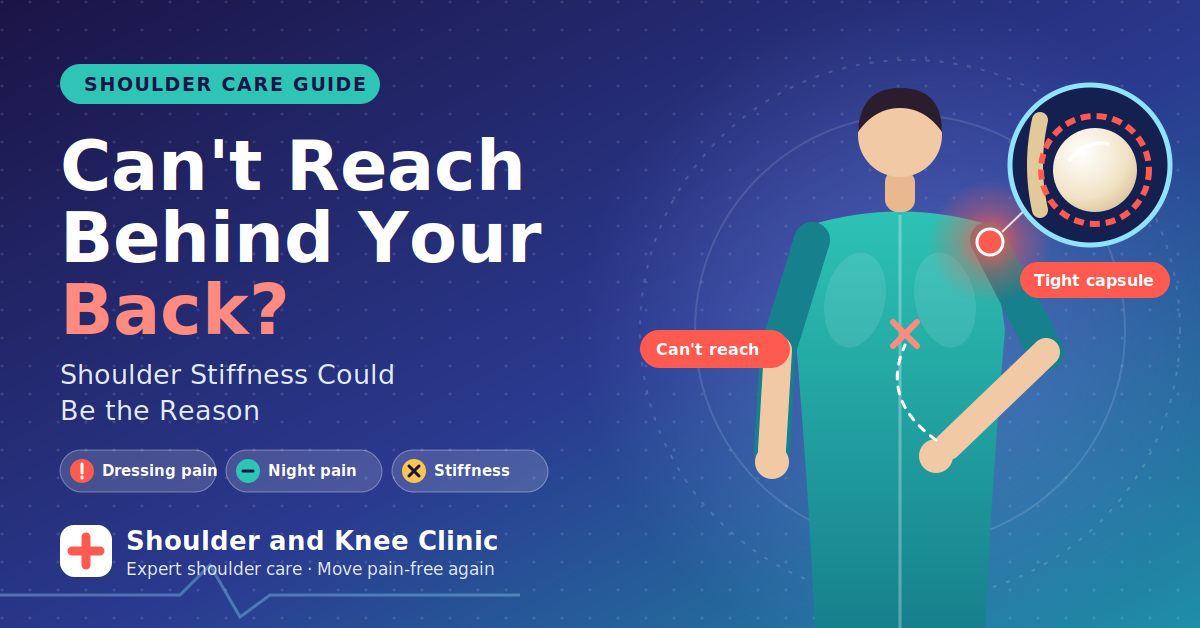
Have you ever had trouble tucking in your shirt or doing up your dress? Many people find themselves unable to reach behind back during everyday activities. You might feel a sudden pang or even a dull pain. Such an unpleasant problem usually indicates shoulder stiffness.
If your shoulder joint is restricted, even slight movement can be painful and difficult. You should never neglect chronic shoulder pain. Early care can protect your shoulder joint from long-term damage.
Why Is It Hard to Reach Behind Your Back?
Reaching behind your back involves complex joint movement. Your arm has to move inward, outward, and backward. This movement places great strain on the shoulder capsule and muscles.
If you already have shoulder stiffness as an underlying problem, then your joint capsule becomes tighter. Normal tissue behaves like a brand-new rubber band. Tough tissues behave like a hard rubber band that resists movement and causes pain.
Most people will realize that they cannot reach behind their backs without any trauma. This tightness develops gradually within weeks or months.
What Does Shoulder Stiffness Feel Like?
Symptoms may vary, depending on the underlying cause. Some patients experience tightness only. Others feel pain and reduced motion.
Common signs include:
- Difficulty reaching behind your back: You can’t reach as far behind you.
- Pain during certain movements: You may feel pain when trying to touch areas behind or above your head.
- Dressing problems: Getting dressed, putting on shirts, using bras, or taking off a jacket can be hard.
- Reduced movement: It may be hard to turn your arm inward or move it in different directions.
- Shoulder tightness: You may feel stiffness in the shoulder joint upon waking or after prolonged sitting.
- Aching around the shoulder: Pain worsens with certain tasks.
- Sleep problems: The patient may have difficulty sleeping on their side due to pain.
Shoulder stiffness can affect one side or both. However, signs vary depending on the condition.
Health Statistics on Shoulder Conditions
Shoulder conditions are common among adults worldwide.
| Condition | Common Age Group | Primary Impact on Mobility |
| Frozen Shoulder | 40 – 60 years | Severe loss of all movements, especially reaching behind back |
| Rotator Cuff Tendonitis | 35 – 65 years | Pain during active lifting and internal rotation |
| Shoulder Osteoarthritis | 50+ years | Gradual loss of range with grinding sensations |
Data indicates that almost 70% of people suffer from some kind of shoulder pain in their lifetime.
What Can Cause Shoulder Stiffness?
Several factors lead to tight shoulders. The following are some of the common causes:
- Frozen Shoulder (Adhesive Capsulitis)
Connective tissue in the joint thickens and tightens. This leads to significant shoulder stiffness. The person cannot move their Arm behind their back.
- Rotator Cuff Tendonitis or Tears
Rotator cuff tendons help to move the Arm. If these tendons are inflamed or torn, you may experience severe shoulder pain when trying to reach behind your back.
- Shoulder Impingement
Your shoulder blade bone rubs against soft tissues as you move your Arm. This can cause inflammation and make it hard to reach behind your back.
- Shoulder Arthritis
The smooth joint cartilage erodes gradually. Bones grind against each other. The result is severe pain and shoulder stiffness.
Why Does Reaching Behind Your Back Hurt?
Reaching behind your back stretches the shoulder joint to its full physical capacity. This puts stress on the anterior and superior aspects of the shoulder joint capsule.
When the tissues are inflamed, this stretch can cause severe pain. You will experience acute shoulder pain while reaching behind you.
If you feel shoulder pain when reaching behind your back, your body automatically protects your Arm. You no longer complete the full range of motion. Unfortunately, not completing the movement can lead to shoulder stiffness.
Simple Things You Can Do for Shoulder Stiffness
If you experience trouble reaching behind your back, try these simple techniques:
- Avoid Forcing the Joint: Don’t force your joint into painful positions. Stop if you experience sharp pain.
- Keep the Arm Moving: Do gentle pendulum movements daily.
- Use Heat or Ice: Use heat packs for tight muscles or ice packs for inflammation.
- Modify Daily Tasks: Choose clothes that button up at the front.
- Comparison: Normal vs. Stiff Shoulder Movement
| Functional Action | Normal Shoulder | Stiff Shoulder |
| Fastening Clothes | Smooth and effortless | Severe difficulty reaching behind back |
| Reaching Back Pocket | Painless and quick | Triggers shoulder pain when reaching back |
| Sleeping Position | Comfortable on any side | Painful when lying on the affected arm |
| Overhead Reaching | Full height extension | Restricted height with sharp discomfort |
When Should You See a Shoulder Specialist?
Continuous pain cannot be ignored. Consult a professional for medical advice when:
- Your shoulder stiffness increases each week.
- You can’t reach behind your back at all for basic personal hygiene.
- You suffer from severe shoulder pain when reaching behind your back that affects your sleep.
- Pain radiates down your arm or causes weakness.
Conclusion
Ignoring joint stiffness will only make everyday activities harder in the future. If you have constant shoulder pain when reaching back, getting diagnosed by an expert is the first step toward a solution.
At Shoulder and Knee Clinic, our focus is on diagnosing and treating all kinds of joint problems. Our experienced team develops custom treatment plans to ease shoulder stiffness and increase your range of motion.
If you can’t reach behind your back or are dealing with constant joint pain, the Shoulder and Knee Clinic has something for you. We focus on rehabilitation therapy so you can move again without discomfort. Don’t delay; contact the Shoulder and Knee Clinic for a consultation.
FAQ
1. Why am I suddenly unable to reach behind my back?
Reduced mobility usually results from tissue inflammation, rotator cuff strain, or early-stage frozen shoulder. An expert evaluation can help determine which tissue is affected.
2. Can shoulder stiffness heal on its own without treatment?
Minor muscle tightness can heal with rest. Structural shoulder rigidity, however, usually continues or even worsens without proper physical therapy.
3. What is the best exercise for shoulder pain when reaching behind back?
Gentle pendulum swings and towel stretches within a comfortable range can improve mobility. Always contact an expert before starting any new exercises to prevent further tissue injury.