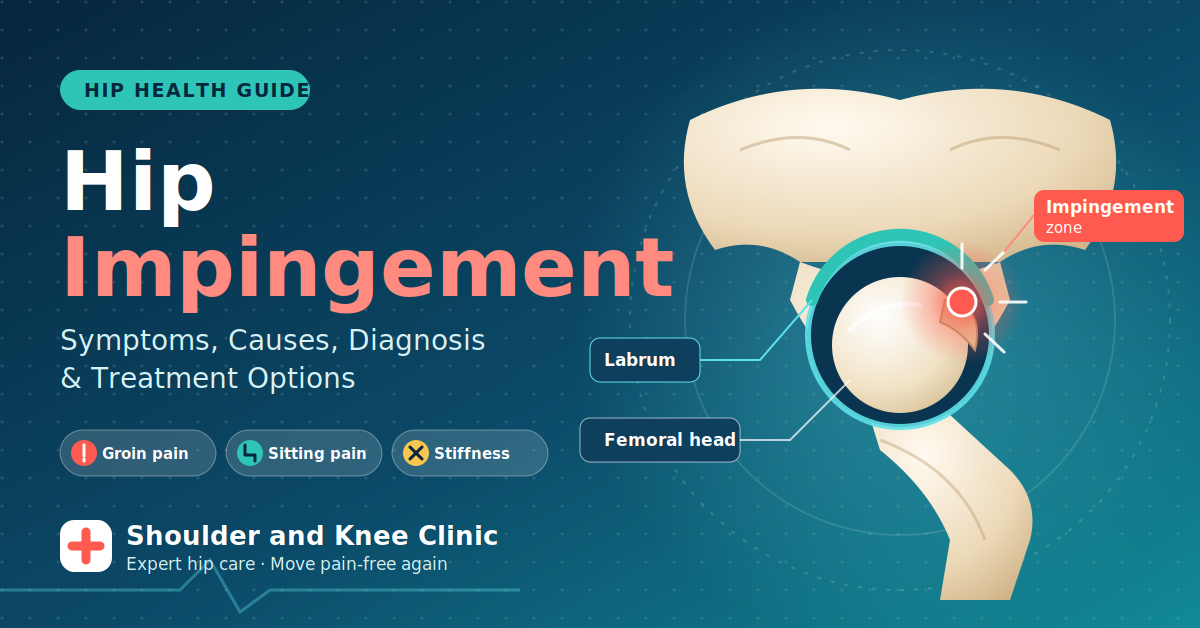
Hip pain is common. But it doesn’t always hurt in the hip. A frequent question is: What is hip impingement? It refers to a condition in which the bones in the hip joint contact each other abnormally during movement.
Knowing about hip impingement can help you get an early diagnosis. Symptoms may arise from routine activities. You may experience it while sitting, bending, walking, or exercising. Recognizing the pattern of symptoms is important.
What Does Hip Impingement Actually Feel Like?
Signs and symptoms of hip impingement can differ from person to person, and some experience mild pain. Some people feel pain during exercise or normal activities. The symptoms usually develop gradually.
Common symptoms include:
- Deep groin pain: Pain may develop on the anterior side of the hip or deep within the groin.
- Pain after sitting: Sitting in the chair for an extended period may exacerbate the pain.
- Pain while bending: Bending the knee towards the chest may lead to painful symptoms.
- Discomfort during squats: Deep squats can be uncomfortable because of pinching or pain.
- Hip stiffness: The hip joint may be stiff and hard to move.
- Clicking or catching: Some people notice cracking or a catching sensation when moving.
- Reduced movement: Moving the hip or turning the leg inward may become painful.
Not everyone experiences all these symptoms. Clicking does not always mean that there is a problem with the hip joint. A proper evaluation is needed to determine the cause.
Key Highlights
- Hip impingement can cause pain and stiffness in the groin or front of the hip.
- Sitting, squatting, and bending can worsen symptoms.
- There are two types: cam and pincer.
- Diagnosis may include an examination and imaging.
- Treatment includes activity modification, physiotherapy, and, in some cases, surgery.
Everyday Movements That Can Trigger Hip Impingement
Certain actions increase hip impingement pain. Many hip movements are part of daily activities. Certain hip movements create friction on the joint.
- Sitting in a low chair.
- Getting up after prolonged sitting.
- Bending down or squatting.
- Getting in and out of a car.
- Running or playing sports.
- Bringing the knee toward the chest.
Why Does Hip Impingement Happen?
What are the main hip impingement causes? Bone formation is one key factor. The femoral head and the hip socket can be irregularly shaped. These structural patterns can lead to femoroacetabular impingement. Developmental aspects are a major factor. Repeated hip movements may also cause problems. Past hip ailments or injuries often cause hip impingement.
Stats Note: Studies show that many active adults have bone-shape variations they don’t know about until pain starts.
Cam vs Pincer Hip Impingement: What’s the Difference?
There are two types of Femoroacetabular Impingement:
- Cam Type: The femoral head is not round. It contacts the socket.
- Pincer Type: The socket overlaps the femoral head.
Some people can have both types at the same time. The type itself does not indicate the severity of the symptoms you might experience from hip impingement.
How Is Hip Impingement Diagnosed?
Diagnosing hip impingement requires a medical professional. The physician reviews your medical history. They carefully assess your hip impingement symptoms. Physical exams include specific hip motion tests. X-rays help evaluate the bony structure. An MRI is needed to evaluate soft tissue injury. Other conditions that can lead to hip pain need to be ruled out for an accurate hip impingement diagnosis.
Can Hip Impingement Damage the Hip Over Time?
Abnormal contact can also affect the labrum. It can also damage the joint cartilage. Hip impingement pain should not be overlooked. Do not brush it off as mere stiffness. Problems can lead to joint deterioration. However, each case does not always follow the same pattern. Nonetheless, early treatment of hip impingement helps preserve the joint.
How Is Hip Impingement Treated?
Treatment options for hip impingement vary from person to person.
- Activity modification: Avoid activities that worsen symptoms.
- Physiotherapy: Increase the strength of the hip.
- Pain Management: Relieve pain safely.
- Arthroscopic surgery: An alternative when conservative treatment is not effective. Hip arthroscopy is one such example.
When Should You See a Hip Specialist?
If hip impingement symptoms persist, seek medical attention. Be on the lookout for the following:
- Recurrent pain.
- Difficulty with sitting, walking, or exercising.
- Increasing restriction in hip movement.
- Pain influences daily activities.
- Pain persists despite changing the activity.
Final Words
Hip impingement symptoms vary among individuals. Watch for repetitive groin pain and limited movement. Early testing can help determine the cause and proper treatment.
For professional treatment, go to the Shoulder and Knee Clinic. Our specialists focus on joint health and mobility. We provide advanced diagnosis and treatment for hip impingement. Create your customized treatment plan now. Live an active life with our expert doctors. Visit our clinic for a hip evaluation and get back to pain-free movement. Our experts use modern equipment to treat the causes of hip impingement.
FAQ
1. What is the main cause of hip impingement?
The primary cause is an abnormal bone structure of either the femoral head or hip joint. This causes resistance during motion and is usually associated with femoroacetabular impingement.
2. Can hip impingement heal without surgery?
Yes. Many people improve with physical therapy, activity changes, and targeted strengthening exercises without surgery.
3. How do I know if my hip pain is impingement?
These include deep groin pain, a sharp pinching sensation when seated or crouched, and stiffness. A doctor must diagnose hip impingement to rule it out.