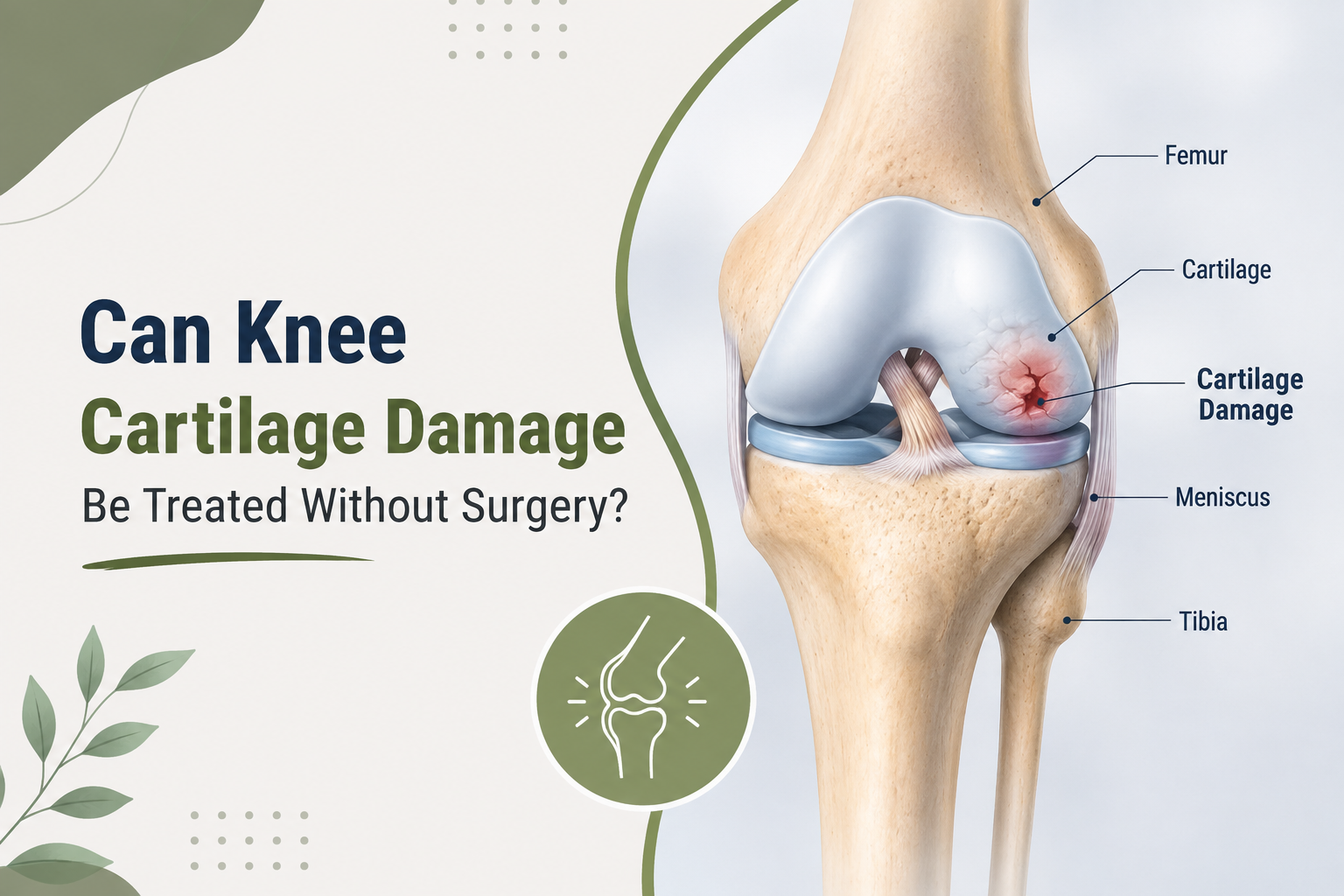
Can knee cartilage damage heal without surgery? This is the most common question asked by people suffering from knee pain, swelling, and stiffness. Damage to knee cartilage can make simple activities such as walking, going up and down the stairs, or even sitting very difficult for many people.
The good thing is that surgery is not always required. People who suffer from mild or moderate knee cartilage injuries can be healed through proper therapy, exercise, and other lifestyle modifications.
Key Highlights
- Many people with mild to moderate wear and tear in the cartilage of their knee joints recover using physiotherapy.
- The non-invasive approach may help reduce pain and protect the knees from further harm.
- Timely treatment may prevent the problem from worsening and the development of osteoarthritis.
What Is Knee Cartilage Damage?
Knee cartilage is a smooth, rubber-like tissue that covers the ends of bones within the knee joint. This helps ensure that the bones move freely without coming into contact with one another. It acts as a buffer, which helps to cushion the shock created during movement.
The cartilage has no efficient blood supply. Therefore, healing is slow. Once injured, the protective covering becomes thin, resulting in bone-on-bone contact and causing pain, swelling, stiffness, and restricted movement of the knee joint.
Knee Cartilage Damage Treatment Without Surgery
Non-surgical treatment of knee cartilage injuries focuses on reducing pain and inflammation and strengthening the muscles surrounding the knee. Such treatments may help increase knee joint mobility.
Common Non-Surgical Treatments
- Activity Changes: Avoid those activities that increase stress on the knee joint, such as jogging and jumping. Activities like swimming and cycling can be done.
- Physiotherapy and Exercises: Strengthening the thigh muscles provides strength to the knee joint and reduces stress on the damaged cartilage.
- Weight Management: Losing extra pounds alleviates pressure on the knee joints. Even a modest loss of pounds makes it easier for one to walk.
- Injections: Injections such as hyaluronic acid or platelet-rich plasma injections may alleviate pain in some cases.
- Knee Braces: The use of a knee brace will aid in providing support to the injured area of the joint.
Check-ups ensure that your doctor is aware of your recovery process and can adjust your treatment program if necessary.
When Is Knee Cartilage Surgery Needed?
Non-surgical therapy is effective in most cases, but may not be adequate for everybody. Surgical intervention may be considered if there is extensive cartilage damage, if the knee joint gets locked up, or if pain persists despite non-surgical therapy.
Surgical treatment for knee cartilage can be prescribed in case of significant loss of cartilage, deep tears, or pain that prevents you from walking and performing everyday tasks. Knee cartilage surgery India can take different forms, such as arthroscopy or other repair operations.
Knee Cartilage Treatment: Choosing the Right Approach
The best knee cartilage treatment depends on how much damage is present, age, level of activity, and the overall knee joint health of the individual. Your doctor will examine your knee and recommend the most appropriate treatment method for your specific case. Early treatment leads to better outcomes.
| Factor | Non-Surgical Treatment | Surgical Treatment |
| Best For | Mild to moderate damage | Large tears or complete wear |
| Recovery | Immediate, gradual progress | Several months of structured rehab |
| Primary Goal | Pain management & muscle support | Structural repair or resurfacing |
Decision factors to consider are age, exercise routine, general well-being, and the exact measurement of the size of the cartilage damage.
When Should You Consult a Knee Cartilage Specialist?
If you experience knee pain, swelling, stiffness, instability, and the above symptoms that do not get better even after resting, you should visit a knee cartilage specialist Mumbai.
Getting treatment early can stop the damage from becoming more serious. The doctor can examine your knee and take tests such as X-rays or an MRI to determine the exact cause of the problem.
Final Recommendations
So, can knee cartilage damage heal without surgery? Cartilage injuries do not heal on their own since there is no blood supply to it. Nevertheless, early treatment may relieve the pain and increase mobility without surgery.
At Shoulder and Knee Clinic, we treat various knee and shoulder conditions with our high-standard services. Our orthopedic specialists ensure an accurate diagnosis and personalized physical therapy, and we give you our top treatment, either surgical or non-surgical, depending on your condition. We aim to help you relieve pain and restore your joint function.
FAQs –
- Can knee cartilage damage heal without surgery?
Cartilage cannot fully heal on its own because it has very little blood supply. But for minor injuries, treatment is possible without undergoing surgical procedures. This can be achieved through physical therapy and other non-surgical means like injections and weight control.
- How long does non-surgical knee cartilage treatment take to show results?
Many people start feeling better within 6 to 12 weeks of sticking to their prescribed treatment plan. Other types of therapies, including PRP injections, can sometimes take 3 months to be fully effective.
- Can exercise make knee cartilage damage worse?
Yes, high-impact activities like running, jumping, or squatting could cause more harm. Low-impact exercises such as swimming and cycling are relatively safe for the knee joint.