
One of the annoying feelings that can happen during your regular activity is realizing that your shoulder is no longer providing total mobility. Even basic activities like combing your hair or pulling the seat belt send a sharp sensation. And with each passing day, it is getting worse.
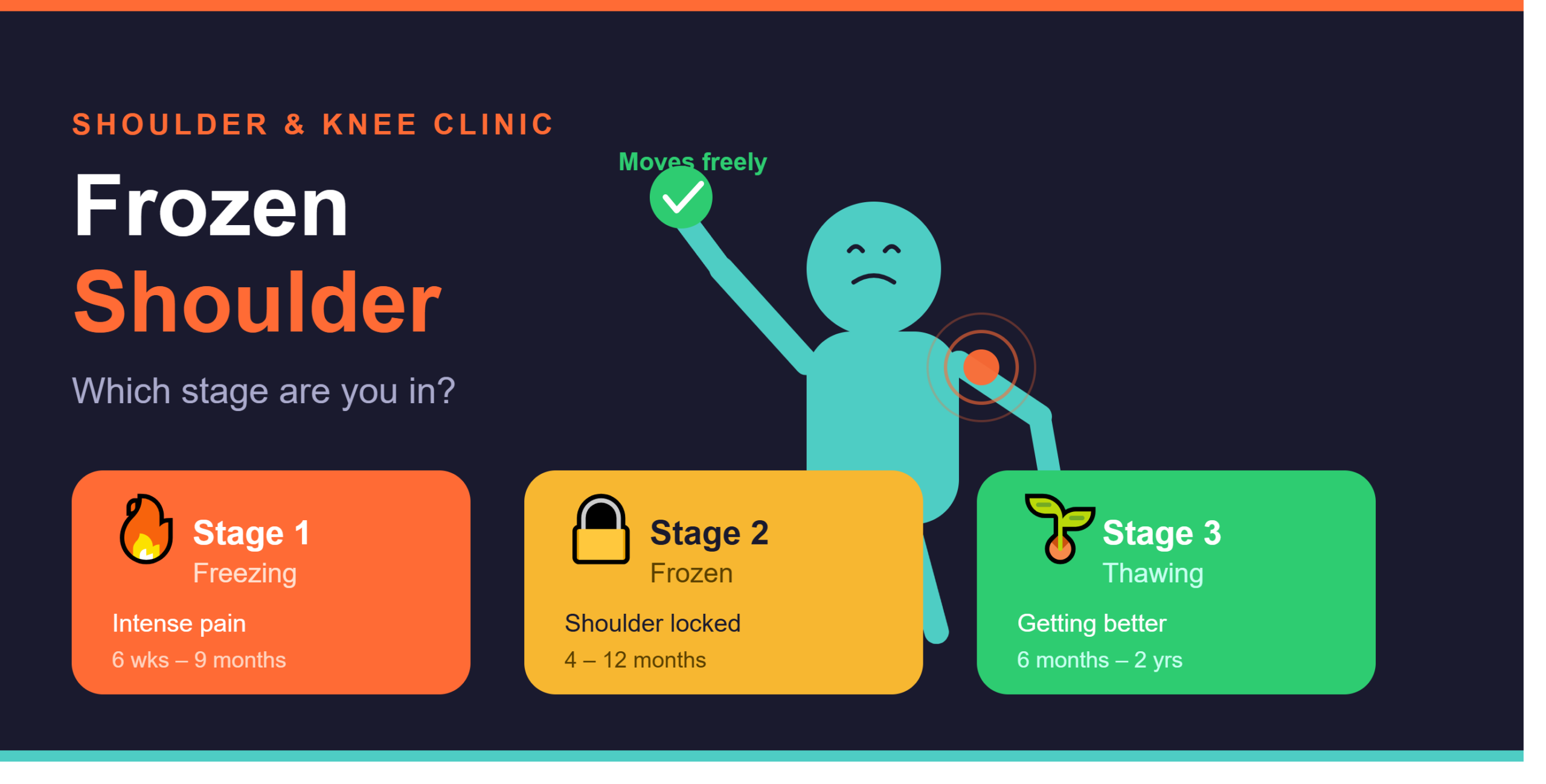
Comprehending the particular stage of your frozen shoulder is crucial because each stage comes with new formats of treatment. The earlier you identify the root cause, the better. While the condition generally causes persistent pain and progressive stiffness, it moves through three distinct predictable phases.
In this article, we will discuss the same in detail, with some deep insights, so that you can take the best step today to lead a better life tomorrow.
What Is Frozen Shoulder?
More formally called adhesive capsulitis, it is when the strong connective tissue capsule surrounding the shoulder becomes thick, stiff, and inflamed, resulting in a loss of the lubricating fluid needed for ease of movement in this joint.
Therefore, when your shoulder freezes, you haven’t simply lost the ability to move your arm, but have also severely limited your ability to perform daily tasks, such as dressing, reaching for items on high shelves, or sleeping on your side. While anyone can develop frozen shoulder, you’re at a greater risk if you have recently endured a limiting medical condition that prevents your use of your arm (e.g., stroke, mastectomy), or if you have a systemic illness (e.g., diabetes, thyroid disease).
Stage 1: Freezing Phase (Excruciating Pain Expected)
This freeze phase of a frozen shoulder can be extremely distressing because many people are caught off guard with the sudden appearance of nagging pain that increases over time.
- Symptom Characteristics : This phase of a frozen shoulder will cause you to have more pain as the shoulder moves through various movements. You may also experience significant achy pain at night while sleeping and waking.
- Everyday Impairments : Activities that require overhead reaching or behind-the-back movement become progressively more difficult to perform.
- How to Help : Pain management is the main focus during the phase, which is inclusive of subtle, pain-free activities. Pushing through severe pain does not stop the freezing process and actually may worsen the inflammation.
Stage 2: Frozen Stage (The Hardened Phase)
At the second stage of this ailment, there is a change in the nature of your shoulder symptoms from sharp, ongoing pain to more consistent levels with considerably more stiffness.
- Traits : Your shoulder joint is now very tight and enshrined in its own capsule. The pain during rest will go down, but the inability to move this joint is going to be noticed much more dramatically.
- Daily life : will become extremely challenging for you as your shoulder mobility is limited so much. Even very simple tasks such as bending down will be almost impossible to accomplish without using your entire body to compensate.
- Nursing : With the joint being so stable in its position and locked, the treatment at this stage should be with specific physiotherapy. Try the stretching exercises as and when recommended by an expert.
Stage 3: Thawing Stage (The Recovery Phase)
The thawing phase represents the final stage, and it is characterized by hope and a gradual return to normal function. This is when your shoulder will begin to thaw out, and you will feel more comfortable.
- Signs/ Symptoms : You will notice a gradual decrease in your stiffness and an ease in normal function.
- Recovery Expectations : You will see improvements in your shoulder’s range of motion at a slow and steady pace. You will need to be patient, as versatility and strength don’t rejuvenate by the hour.
- Importance of Continuity : You must stay committed to your physiotherapy and home stretching routine during this critical period. By continually working on your joints, you will maximize your range of motion.
How long does a Frozen Shoulder take to Heal?
This ailment is known for a very slow progression. The normal duration for a frozen shoulder is from one year to three years maximum in order to run its full course.
| Stage | Typical Duration |
|---|---|
| Stage 1 | 6 weeks to 9 months |
| Stage 2 | 4 to 12 months |
| Stage 3 | 6 months to 2 years |
The time it takes you to recover in this case is influenced by your general health, how much you commit to physical therapy, and any other pre-existing conditions you have, such as diabetes. If diagnosed early enough, you can receive curated solutions, be more comfortable, and possibly shorten the length of the healing timeline.
Frozen Shoulder Treatment Options
Your treatment pathway will be shaped by how far along you are in your recovery. Some of the more conservative treatment options include:
- Activity Modification : Learning how to modify your lifting or reaching habits so as not to place stress on the joint.
- Pain Medication : Using anti-inflammatory medications to help control pain, particularly in the initial phases of pain where it is the worst.
- Physiotherapy : Participating in specially designed stretching exercises to help maintain or slowly regain your range of motion.
- Injectables : Corticosteroids can help you significantly reduce inflammation and provide you with considerable relief from pain during the uncomfortable freezing phase.
- Advanced Treatments : Should conservative treatments not result in pain relief even after several months, your specialist may recommend advanced treatments, such as hydrodilatation or arthroscopic surgery.
When should you call a doctor?
Shoulder pain lasting longer than a week and unrelenting stiffness are both reasons to seek help. If you find that you are dressing differently due to shoulder pain, are unable to sleep at night, or have trouble lifting your arm even though you’re trying very hard to do so, you need to see a specialist.
A doctor who specializes in frozen shoulder will accurately assess your condition by imaging tests and medical history. This will prevent you from undergoing certain treatments that may exacerbate your existing injury and guide you safely through the healing process.
Final Takeaway
The earlier you understand the stage of your frozen shoulder issue, the easier it gets to navigate through your recovery process. Though it is a time-taking methodology, most patients have reported that they regained normal shoulder mobility after the complete treatment plan.
If you are still confused about where to start your shoulder healing journey, you can book a consultation with the best orthopaedic surgeon in Mumbai today. Try our seamless platform shoulderandkneeclinic.com for a prompt appointment booking experience.