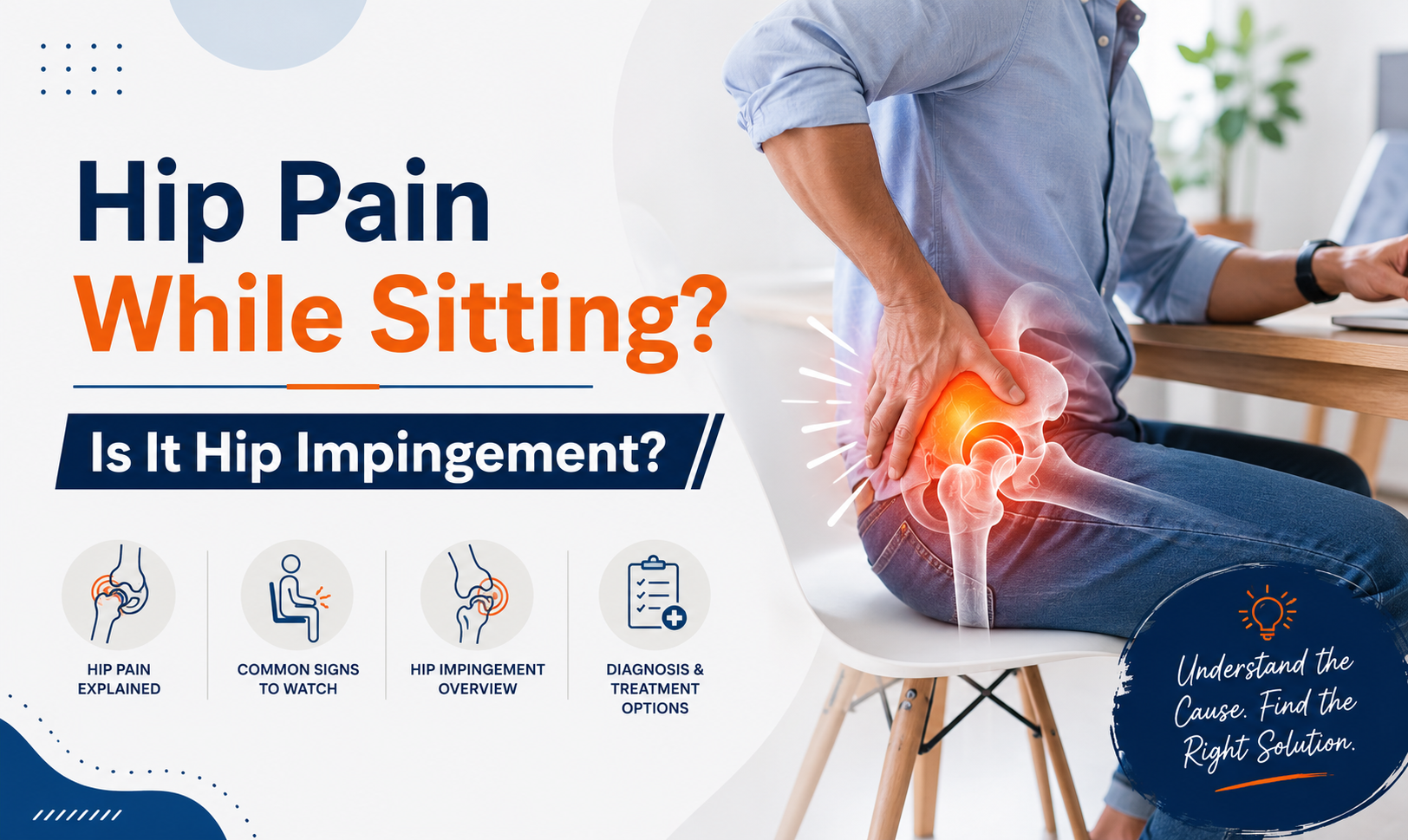
Hip pain can be experienced while sitting for long hours, at work, or even when one is sitting in a car experiencing heavy traffic. However, if you periodically notice a sharp dull or ache, persistent throb in your hip while sitting, it might be greater than standard fatigue.
For office goers, students, and any other personnel with a sedentary routine, sitting-led hip discomfort is an increasingly common medical record. While it is easy to blame bad posture, poor quality of chair, etc., this discomfort often indicates an underlying issue within the joint, such as hip impingement. Identifying these signs early in the stage can make a huge difference in one’s healing journey and subsequent timelines.
What Entails a Hip Impingement?
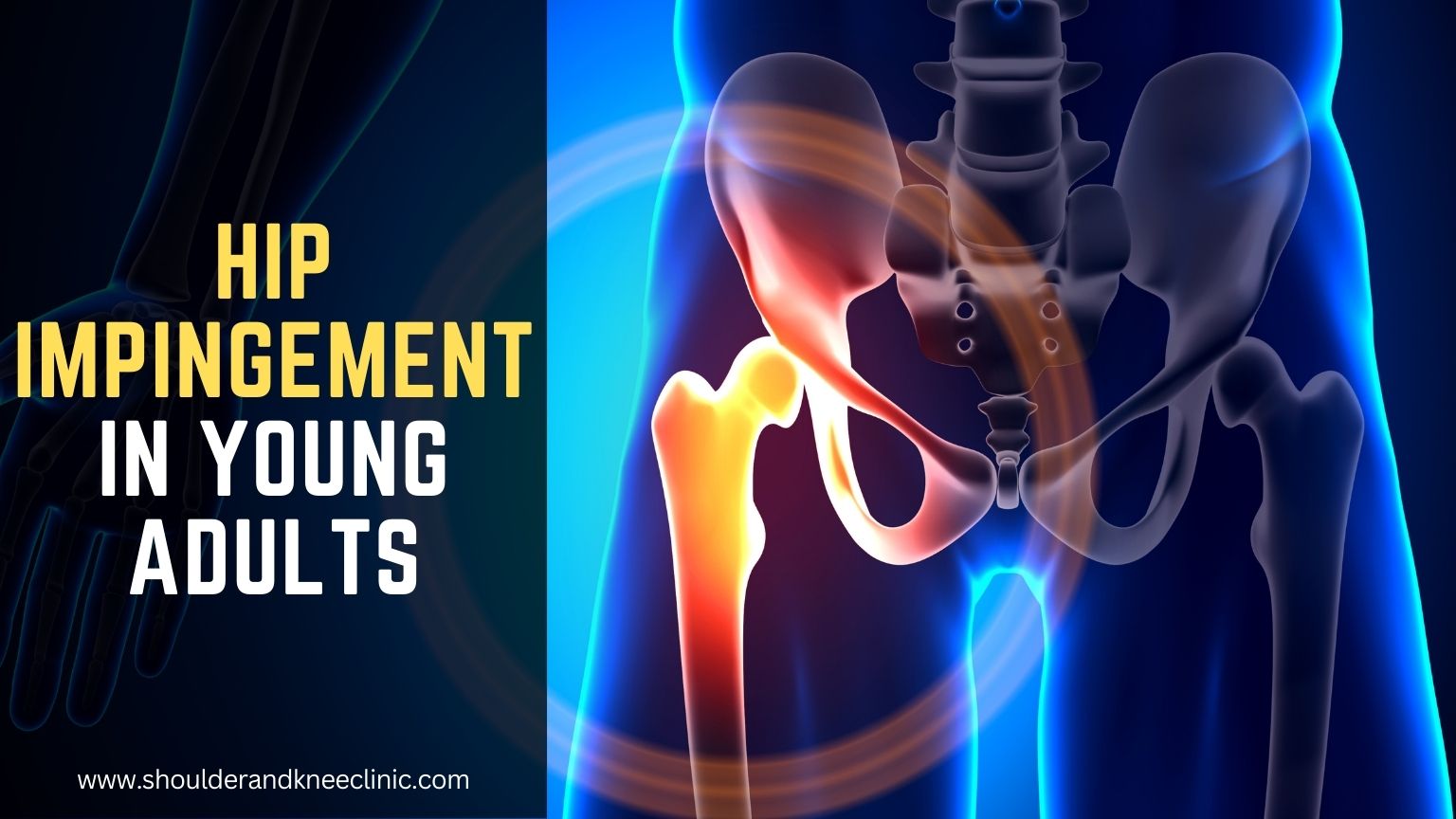
The hip is a “ball and socket” type of joint between the thigh bone (called the femur) and the pelvis (the acetabulum). In normal conditions, movement of the femur in the acetabulum is smooth and frictionless.
The medical term for hip impingement is femoroacetabular impingement (“FAI”). This condition develops when there is pronounced friction between the femur and acetabulum. FAI is caused by the femur or acetabulum being or developing irregular shapes. Instead of the femur gliding smoothly in the acetabulum, the two bones rub against each other when they move, which can cause damage to the cartilage (defensive cushioning) or labrum (rubbery ridge of cartilage surrounding the socket).
This hip ailment may occur in anyone, but mostly occurs within two common groups of people:
- Active athletes/fitness enthusiasts participating in repetitive twisting movements (i.e., football or baseball) or performing deep squats (i.e., power lifting).
- People who work sitting at desk jobs for prolonged periods (i.e., backend office jobs).
Why Do You Experience Hip Pain While Sitting?
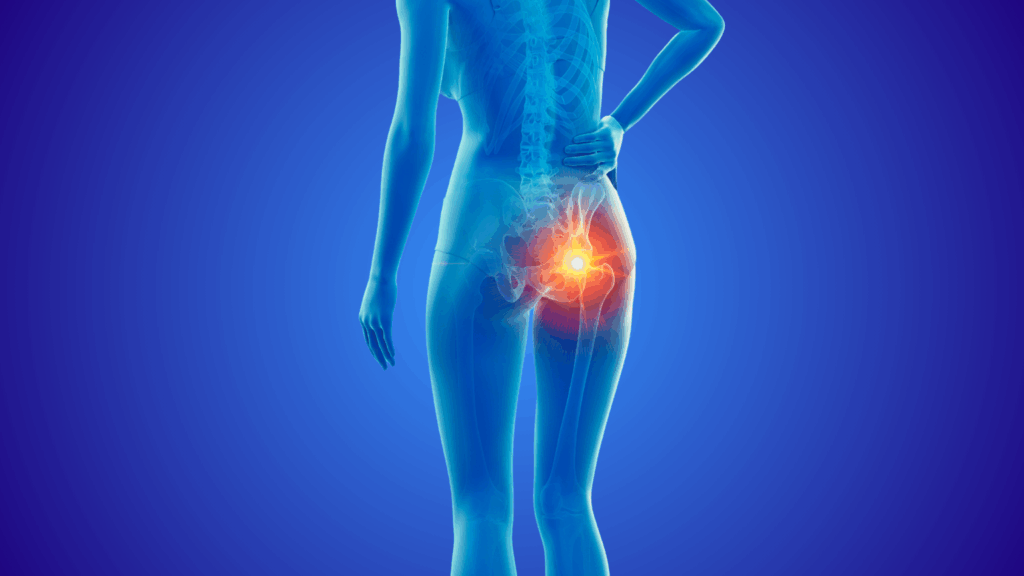
If you are standing, you have your hip joint in a neutral, extended position, and when you go to sit down, your hip joint will go into a position of prolonged flexion (90 degrees or less).
The new position of your hips from sitting down has increased mechanical pressure on the front of the hip joint.
Additionally, with an irregularly shaped bone, there will be a lot more force applied to the neck of your femur than if the bone were shaped normally. In fact, without constant movement, there is the potential to create movement restriction, or “frozen” joints, over a period of time. Therefore, what may begin as mild annoyance during a long business meeting can quickly evolve into chronic cartilage compression, which can signify an imminent threat to the health of your hip joint.
Crucial Indicators of Hip Impingement
The symptoms of hip impingement can be identified and distinguished from regular muscle soreness by observing specific symptoms. Some of these common symptoms include:
- Discomfort in the hip or groin when seated or bending at the hip (especially in low positions such as sitting in a low chair or driving).
- A decrease in your range of motion at the hip joint, e.g., difficulty putting on shoes or socks.
- Pain or discomfort during activity, e.g., when walking, squatting, pivoting, or switching direction.
- Mechanical click (i.e., catching/clicking/snapping feel) deep within the hip joint as well.
- Progressive worsening of pain that does not improve after a few days of rest and increases in frequency over the next several weeks to months.
Hip Impingement vs. Normal Hip Pain
There are significant factors that help bifurcate the two kinds. Given below is a side-by-side comparison to help you:
| Attribute | Common/Muscular Hip Pain | Hip Impingement (Joint-Related) |
|---|---|---|
| Location | Typically felt in the outer buttock or side of the hip. | Felt deep in the groin or the front of the hip (the “C-sign” distribution). |
| Timeline | Temporary; usually resolves within a few days to a week. | Persistent; lasts for weeks and consistently triggers in specific positions. |
| Traits | Regular activity helps to ease up | Aggravated by deep bending, prolonged sitting, or sudden twisting. |
Options to Treat Hip Impairment
The focus of treatment for an impaired hip is mostly on reducing the friction in the joint and rejuvenating all of the muscles around the hip to balance. The treatment plan will differ based on how severely the hip is impacted. Mostly, the ones below are inclusive:
- Modifying Activities : For example, replacing low chairs with higher ones; avoiding deep hip flexion for extended periods of time; taking regular standing breaks throughout the day.
- Physiotherapy : Physical therapists will design an exercise program targeting your abdominals and/or gluteal muscles to take the pressure off the front of the hip joint.
- Managing Pain : Use temporary anti-inflammatories or prescription medications to manage pain and irritation in the joint.
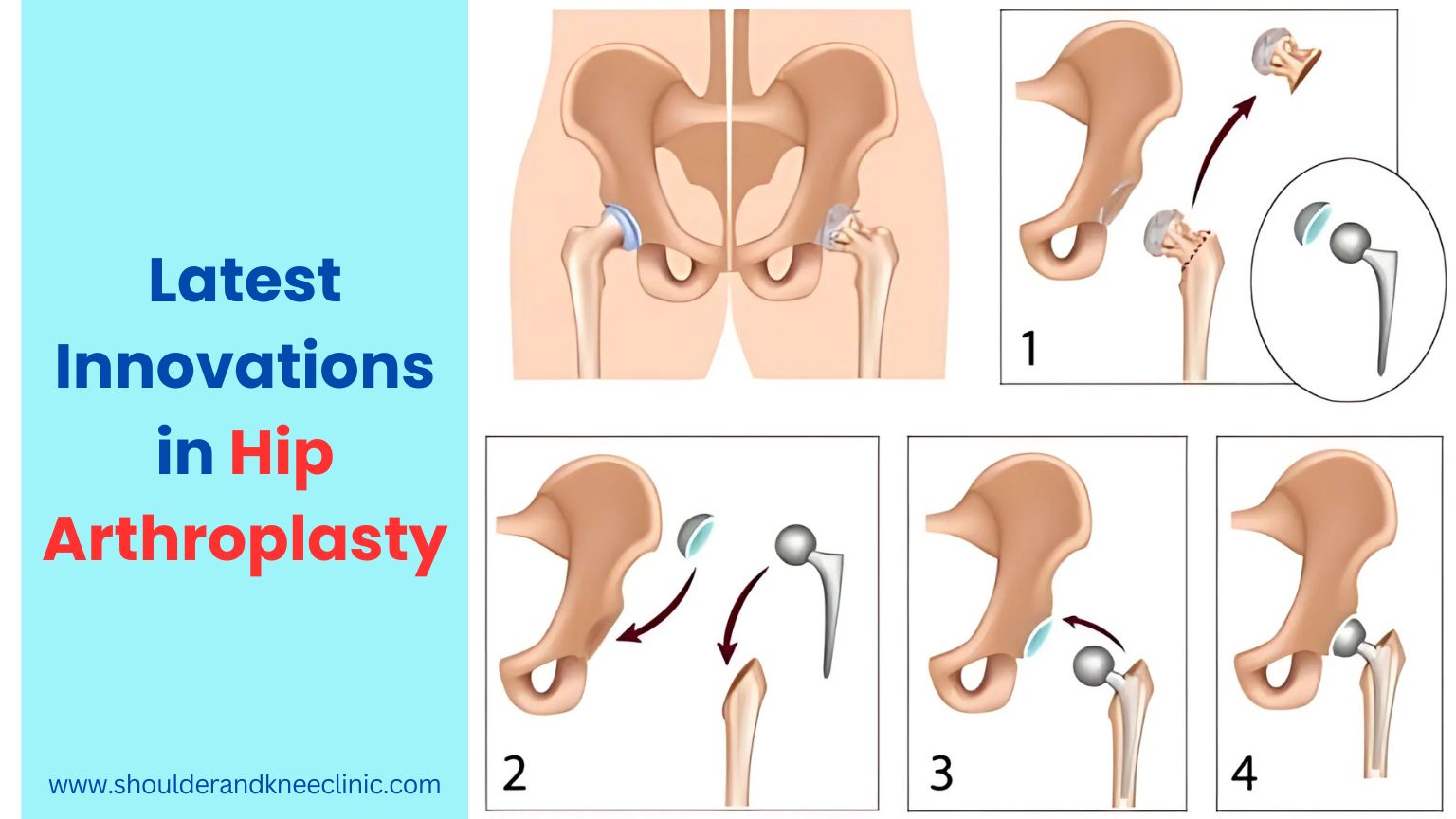
- Advanced Interventions : If you don’t find relief with these conservative measures, consult an orthopaedic surgeon who might evaluate with the help of minimally invasive procedures such as hip arthroscopy.
When is it best to contact a doctor?
You should consult with an orthopaedic physician if you are unable to sit or walk normally due to pain in your hip. If your symptoms are constant or persistent, affecting your level of activity and creating difficulty sleeping at night, you need to see someone for evaluation.
Having an earlier diagnosis allows you to lessen the amount of damage to the cartilage in your joints from excessive wear.
Hip Care Treatment Scenario in Mumbai
A precise diagnosis will help you to find your way through joint pain. With some of the finest medical facilities available, very competent advanced diagnostic imaging and clinical tests will help to locate the exact underlying cause of your discomfort in Mumbai, India.
As each person’s anatomy and daily activities are different, you must have individualized hip care. Your path to recovery may use either specialized physical therapy treatments or advanced minimally invasive interventions. Either way, you must take the proper steps under the care of a qualified orthopedic surgeon.
Final Takeaway
Regular hip issues and discomfort while sitting are not something common or a minor side effect of your activities. Sometimes it is a signal from your body that the stress has caused hip impingement or a joint issue.
Identifying and addressing the symptoms in the early stage of hip ailments helps one to get back on track in no time. If you are confused about which orthopaedic surgeon to consult, book the best one in Mumbai from our shoulderandkneeclinic.com platform today.