
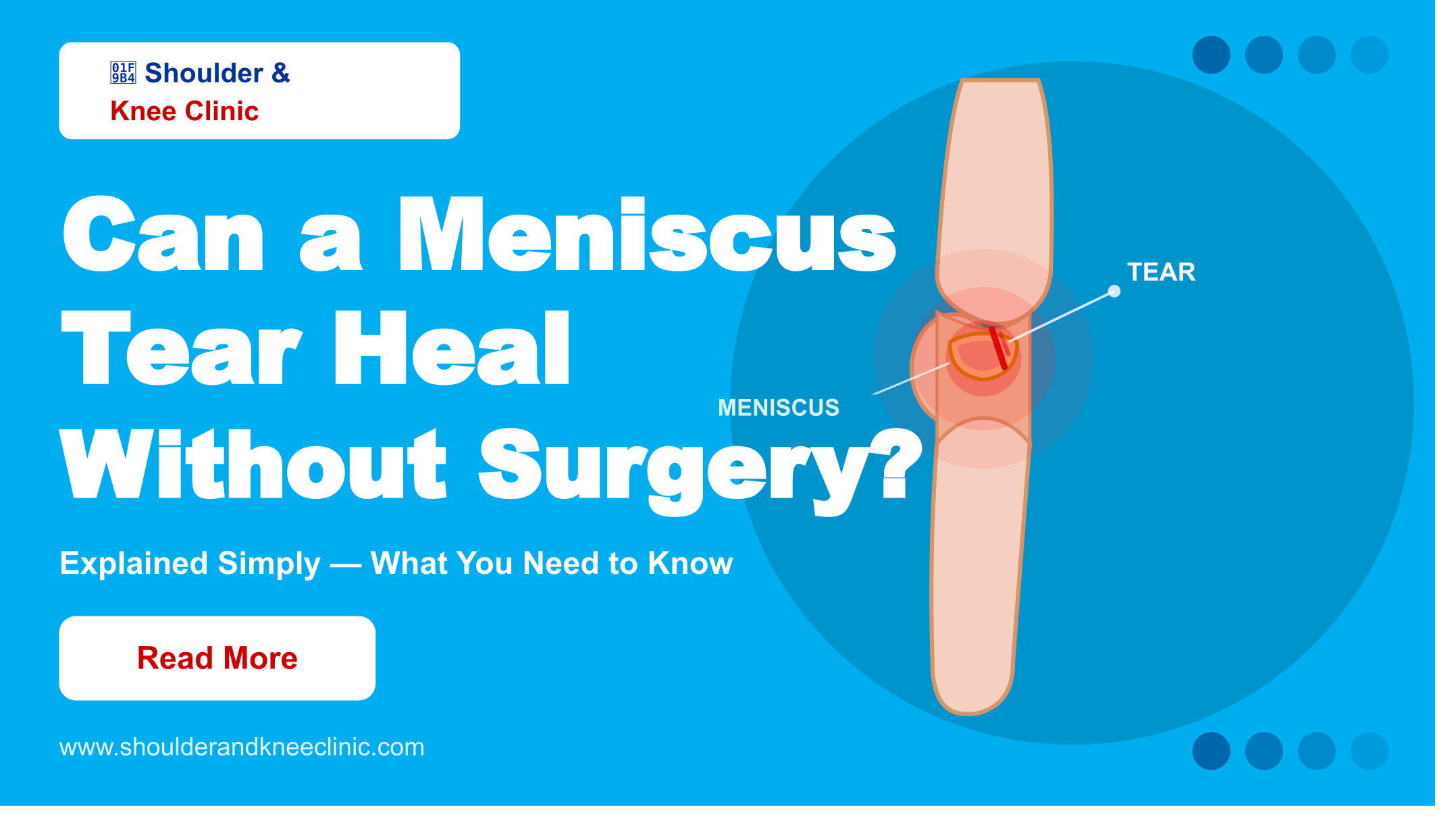
This is a kind of knee ailment that is mostly common across athletes, active adult individuals, and also the aged demographic, worldwide. For instance, a football player on the field can take a sharp turn, tackling the ball; a dancer stretching while dancing or a normal person squatting during a regular chore, can face this Meniscus damage issue in their knee.
Oftentimes, the patient thinks of managing early symptoms such as swelling, pain, and knee yielding; but in most cases, their condition worsens and lifestyle deteriorates. Thus, the underlying question regarding the tear healing on its own is subjective and is related to the seriousness of the tear.
At Shoulder and Knee Clinic, our experts thought of shedding light on this ailment in-depth, which might help relevant patients in their journey to recovery.
What Is a Meniscus Tear?
The meniscus is made up of 2 tough, rubbery cartilage pieces that form a C shape and function like shock absorbers in your knee, padding the space between the top of the femur and the bottom of the tibia. The medial and lateral menisci correspond to the inside and outside of your knee, respectively.
Now, tears usually occur due to twisting or turning your knee in a weight-bearing position. And doctors divide them into 3 categories:
- Grade 1 (Minor) – small tears within the tissue that cause mild pain and swelling, but the knee remains stable.
- Grade 2 (Moderate) – deeper longitudinal tears causing significant pain, stiffness, and swelling with bending of the knee.
- Grade 3 (Severe) – large or complex tears that may result in segments of the meniscus flapping around or completely separating from the remainder of the same, therefore leading to instability within the joint.
Can a Meniscus Tear Heal Without Surgery?
The ability of your meniscus to heal naturally is determined by one major factor, which is nothing but its blood supply. The outer third, or “Red Zone,” of your meniscus receives ample amounts of blood, meaning that minor tears here likely heal naturally through non-operative means since blood provides the nutrients necessary for tissue repair.
However, if your tear extends into the “White Zone” (the inner two-thirds of your meniscus), it cannot easily heal on its own since that portion does not have a direct blood supply, and consequently, non-operative treatment will be focused more on symptom management than on structural healing. However, commitment to lifestyle changes and appropriate rehabilitation will allow for non-operative management of small stable Red Zone meniscus tears.
Conservative Treatment Options for Injury
When your orthopaedic physician decides that your injury can be managed through conservative treatment, you must begin as soon as possible in order to prevent further damage. Conservative treatment usually includes the following:
- Rest and activity alterations, such as ceasing activities like weight lifting or playing sports, and avoiding twisting, bending deep at the knees, or squatting, allow your injury to settle.
- Ice and medications, such as over-the-counter medications, to reduce swelling.
- A physiotherapy program (under expert guidance) is the most important part of conservative treatment.
- Exercises to strengthen your leg muscles, such as quadriceps, hamstring, and calf exercises. The stronger your legs are, the less physical stress is placed on your knees, as the legs are an additional support for the knees.
When Surgery May Be Needed
Surgery may be indicated if any of the following conditions are identified:
- Significant or severe damage : “bucket-handle” tears which dramatically change the anatomy of the knee joint.
- The knee will not straighten out for you (knee “lock-up”) because a torn piece of cartilage is preventing leg extension.
- Persistent pain after conservative treatment has failed despite many months of trying (rest, physical therapy, etc).
- High physical activity level from either athletics or occupation, providing excessive stress on the knee joint(s).
Recovery Time Without Surgery
Having patience is very important because of the differences in healing rates between muscle (which heals at a faster rate) and cartilage. And a person with a mild to moderate tear can expect 6 weeks to 3 months to heal properly. How quickly a person returns to their normal level of function is contingent upon how consistently they follow their rehab and physiotherapy program.
If an individual rushes to return to activity, especially high-impact activity, before their body has adequately healed, they are putting themselves at significant risk of re-injuring their already injured tissue.
Indications That The Tear Is Recovering
Keep track of these signs for healing during rehab:
- Less pain and swelling in your knee every day.
- Improved ability to bend and stretch your knee properly.
- No more sounds like clicks/bumps/pop from your joint when it moves.
- Can walk short distances easily or keep your leg straight without leaning over.
When to See a Doctor
Consult your physician if you are in pain, even after the conservative R.I.C.E treatment. You’ll notice that you still have difficulty bending or moving your knee, or you might experience instability in your knee, especially when performing basic activities like moving up and down stairs.
In that case, it’s best to consult your private physician (if any) and then reach out to experienced orthopaedic surgeons for a detailed report.
Final Takeaway
The seriousness of Meniscus tears is hard to identify by the naked eye. It can be a radial, horizontal, longitudinal or more complex damage. So, rather than waiting for the worst days, a professional check-up with X-rays and MRIs would give you the best path towards prompt and effective healing.
Give your knee a second chance to make your life easier today. Book a consultation with the best orthopaedic surgeon in Mumbai on our platform to get a detailed report of your condition.